
3 frames
Why · what · how at shelf
The in-store stack
Demos without merchandising waste samples. Merchandising without a planogram fights the category. The full in-store program reads all four layers together.
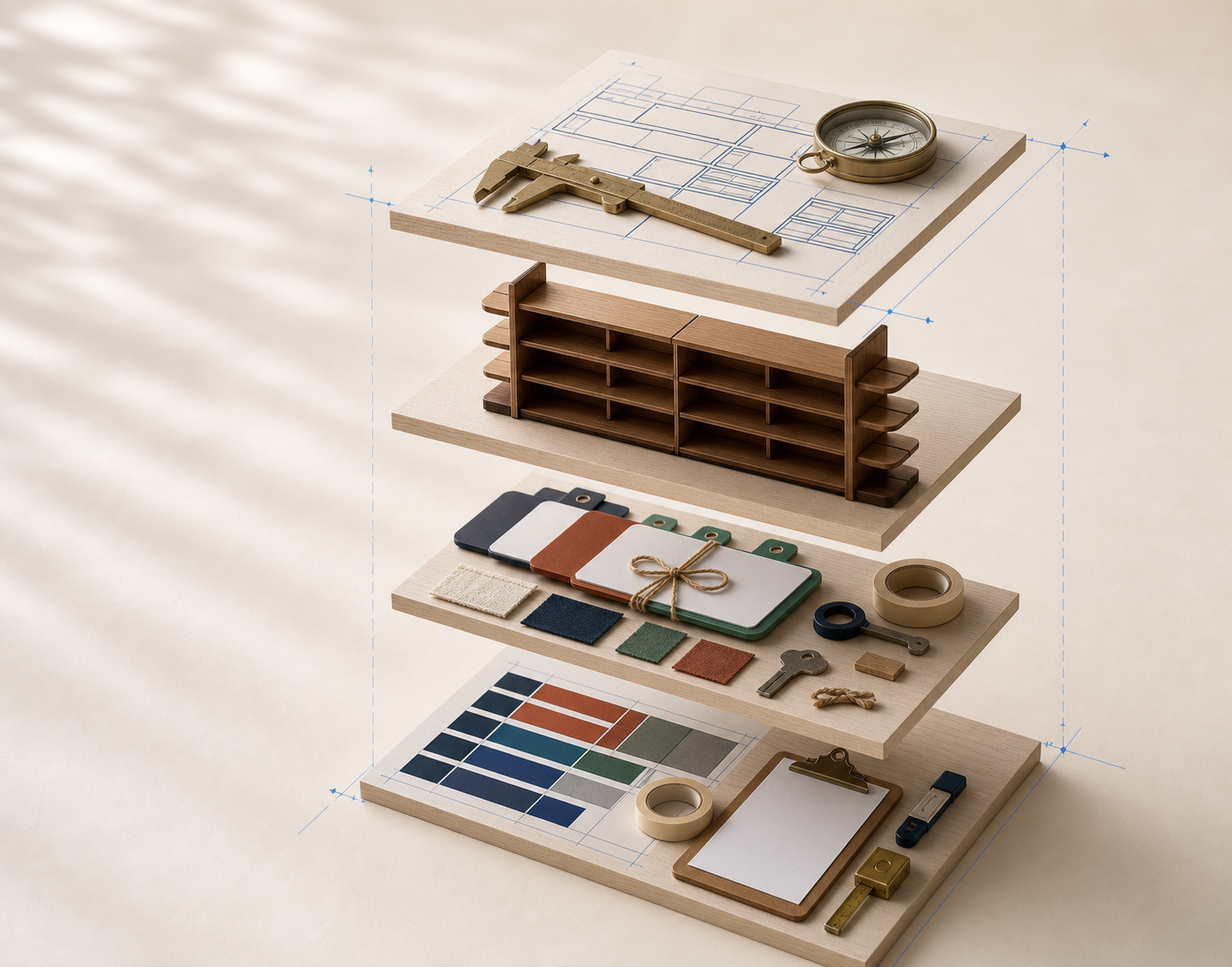
Why · what · how at shelf
Where in-store dollars work
Plan · brief · execute · audit · learn
B.01 · The strategic frame
In-store marketing rewards brands that show up consistently and audit honestly. Three frames keep launch energy from leaking before it reaches the shelf.
The shelf is the last meter of the purchase decision. Activities that happen there — demos, merchandising, schematics, promotion — translate launch investment into actual scan.
In-store marketing spans demos and sampling, merchandising standards, store schematics and planograms, and the promotional tactics that surround a launch or seasonal program.
Brief the field, broker, and merchandiser network to a single spec; sequence activity to launch and program windows; audit compliance and tie what you see to sales.
C.01 · Where in-store dollars work
In-store marketing concentrates around a small set of tactics. Knowing how each one earns its place is the difference between activity and impact.
In-store demos and sampling programs that turn a category passerby into a first trier — particularly during launch windows and seasonal pulses.
Shelf sets, secondary placements, signage, and shelf-talkers — the visible execution that brokers and merchandisers maintain week to week.
Planograms and store schematics that define where a product lives in the category — the structural decision that compounds every other tactic.
End-cap programs, ad features, and shopper marketing tied to the launch and ongoing calendar — the promotional surround that drives velocity.
The execution layer: clear briefs to field reps, broker partners, and third-party merchandisers — the people who actually fix the shelf.

D.01 · Practical process
Five steps from launch plan to in-store learning.
Map demos, merchandising windows, and promotional support against the launch calendar and ongoing retail programs — by retailer and region.
Confirm planogram placement and adjacency with the retailer before any execution dollar is committed downstream.
Issue one clear brief to brokers, field reps, and third-party merchandisers — what the shelf must look like, by store and by week.
Run demos and merchandising on schedule; audit shelf compliance through field photos and store visits; flag gaps fast.
Tie compliance and demo activity back to scan and velocity. Translate what worked at the shelf into the next program plan.
Visibility at the shelf is not a poster — it is a system of demos, schematics, merchandising, and promotion working in time with the launch calendar.
Conzumables Network · in-store marketingE.01 · Curriculum links
F.01 · Get the in-store framework
Send the launch window, target retailers, in-store activity mix, and field network. The curriculum team returns a brief template, schematic checklist, and audit framework grounded in the in-store stack.
G.01 · Review notes
InTheStore.org educates brands on how to effectively execute and manage in-store activities during product launches and ongoing retail programs. It covers key elements such as demos, merchandising strategies, store schematics, and promotional tactics to drive visibility and sales at the shelf.